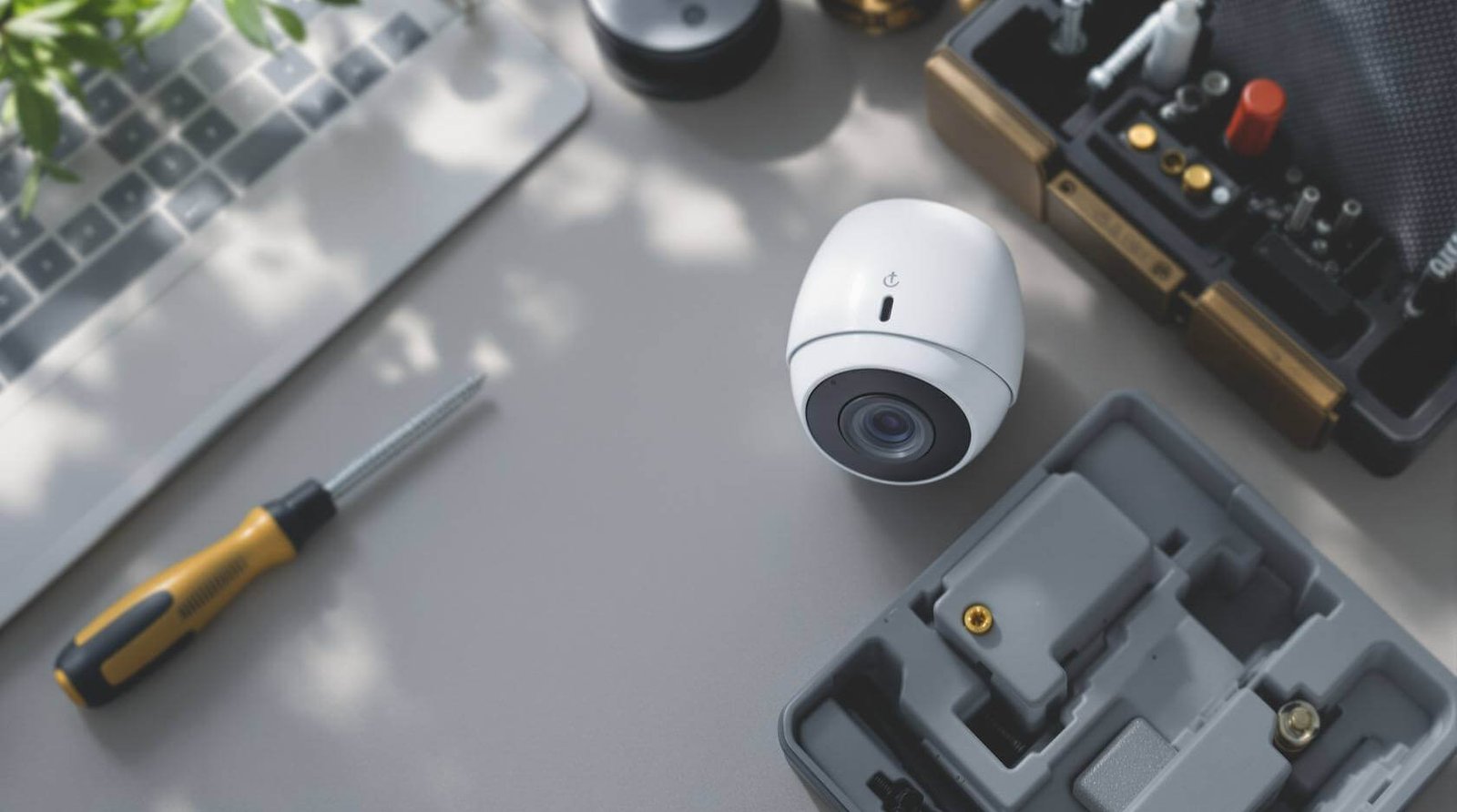
Security cameras have never been easier to buy, and plenty of online videos make installation look like a weekend project. For some people it is. For others, a DIY attempt ends with cameras aimed at the wrong spots, cables that fail after the first storm and a system nobody trusts. Before you decide which way to go, it helps to look honestly at what each approach involves.
What DIY Installation Really Involves
Mounting a camera is the easy part. The real work tends to be everything around it:
- Planning camera positions and angles that cover what you actually need
- Running cable through attics, walls, crawl spaces or conduit
- Terminating network cables correctly and testing each run
- Weatherproofing outdoor connections
- Configuring the recorder, storage, motion zones and user accounts
- Setting up secure remote viewing on phones and computers
Wire-free Wi-Fi cameras skip some of these steps, but they come with their own trade-offs, including battery maintenance, weaker Wi-Fi at the edges of a property and, often, ongoing subscription fees for cloud storage.
When DIY Makes Sense
- Small homes or apartments that need only a few cameras
- Properties with easy cable paths, such as an accessible attic above single-story rooms
- Owners who are comfortable with basic networking and hand tools
- Temporary setups or rentals where permanent wiring is not allowed
If this describes your situation, a well-chosen plug-and-play kit can do the job at a lower cost.
When a Professional Is Worth It
The case for professional security camera installation grows quickly as systems get bigger or more complex. It usually makes sense for:
- Businesses with multiple entry points, parking areas or large interiors
- Multi-story buildings or properties with finished walls and ceilings
- Long cable runs, detached buildings or areas requiring trenching
- Systems that include PTZ cameras, license plate recognition or access control integration
- Situations where footage may be needed for insurance claims or legal matters
The Hidden Value of Experience
Experienced installers bring judgment that is hard to learn from a video. They know how high to mount a camera so faces are visible rather than just the tops of heads. They know which views will be blinded by the setting sun or headlights. They choose lenses based on distance, and they understand how to keep network cameras isolated from the rest of a business network.
They also handle the less visible details: proper cable support, drip loops, sealed penetrations, surge protection and clean labeling. These are the things that determine whether a system still works reliably five years later.
Comparing Costs Fairly
DIY looks cheaper because there is no labor bill, but a fair comparison includes your time, the tools you will need to buy, and the cost of mistakes such as damaged drywall, re-running bad cable or replacing a camera that was the wrong type for the location. Professional installers may also be able to source equipment at trade pricing, which offsets part of the labor cost.
Also consider warranty and support. Many installers warranty their workmanship and can troubleshoot problems remotely. With DIY, you are the support team.
See also: The Role of Tax Firms in Supporting Family-Owned Businesses
A Middle Path
Some property owners split the work. They buy the equipment and handle configuration themselves, but hire a professional to plan the layout and run the cables, which is the hardest and most disruptive part of the job. Others ask an installer for a site survey and design, then carry out a simple installation on their own.
Questions to Ask Before You Decide
- How many cameras do I need, and how hard are the cable paths?
- Do I need footage good enough to identify people and vehicles?
- Am I comfortable configuring a recorder and securing remote access?
- What would it cost me if the system failed during an incident?
Answer those honestly and the right choice usually becomes clear. For a couple of cameras at home, DIY is often fine. For a business or any system you are relying on to protect people and property, professional installation tends to pay for itself.