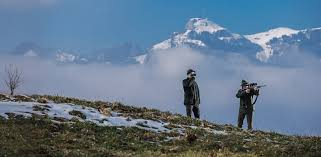
Visibility can become a serious challenge when people need to observe distant areas in darkness, fog, smoke, or changing weather conditions. Traditional optical binoculars depend heavily on available light, making it difficult to identify objects when visibility is limited. Thermal imaging provides a different approach by detecting heat energy rather than relying entirely on visible light. For users who need extended observation capabilities, thermal binoculars with 1000m detection distance can provide a practical solution for monitoring distant subjects and improving situational awareness.
Designed for outdoor observation, wildlife monitoring, search activities, security applications, and other demanding environments, thermal binoculars can help users recognize heat signatures that may otherwise be difficult to see. Guide Outdoor provides thermal imaging solutions designed to support clear observation in challenging conditions.
Understanding 1000m Thermal Detection Distance
A thermal binocular’s detection distance refers to how far away the device can detect a thermal signature under suitable conditions. A 1000m detection distance means that a thermal target may be detected from approximately one kilometer away, depending on factors such as target size, environmental conditions, atmospheric clarity, and device specifications.
Detection should not be confused with identification or recognition. A thermal device may detect a heat source at a considerable distance while requiring a shorter distance to determine exactly what the object is. This distinction is important when selecting thermal binoculars for a particular application.
The ability to detect distant heat signatures can nevertheless provide a valuable advantage. Users can monitor larger areas without immediately moving closer to a potential target, helping them maintain awareness of their surroundings.
Better Visibility in Complete Darkness
One of the major advantages of thermal binoculars is their ability to operate without traditional visible illumination. Since thermal imaging detects infrared radiation emitted by objects, users can observe heat differences even when the surrounding environment is very dark.
This makes thermal binoculars useful during nighttime outdoor activities. A person, animal, vehicle, or other warm object can produce a noticeable thermal signature against a cooler background.
For users conducting observation after sunset, a thermal binocular can therefore provide information that standard optical equipment may not easily deliver. Guide Outdoor thermal imaging technology is designed to help users make better use of thermal differences when visible-light conditions are limited.
Improved Awareness Across Large Areas
A 1000m detection capability can be particularly useful when monitoring open spaces. Fields, forests, trails, industrial areas, and other large environments can be difficult to observe efficiently with equipment designed only for short distances.
Thermal binoculars allow users to scan distant areas and look for differences in temperature. Instead of concentrating only on objects that are visually obvious, users can identify potential heat sources within the viewing area.
This broader observation capability can support applications such as wildlife observation, outdoor exploration, property monitoring, and search activities. The ability to survey an area from a distance can also reduce the need for unnecessary movement.
Performance During Fog, Smoke, and Haze
Visibility problems are not limited to nighttime. Fog, smoke, haze, and other environmental conditions can reduce the effectiveness of conventional optical observation. Thermal imaging can sometimes provide useful contrast in situations where visible-light imagery becomes difficult to interpret.
However, thermal imaging is not immune to environmental limitations. Dense atmospheric conditions can affect thermal performance, and the exact results depend on the environment, distance, humidity, and temperature differences between the target and background.
For this reason, users should consider thermal binoculars as an additional observation technology rather than an unlimited solution for every visibility problem.
Detecting Heat Differences Between Objects
Thermal imaging works by displaying differences in infrared radiation. Objects with different temperatures can appear with different levels of thermal contrast on the display.
For example, a warm animal moving through a cooler outdoor environment may produce a noticeable thermal signature. Similarly, a person best thermal monocular with rangefinder or operating vehicle can stand out from nearby surfaces when there is sufficient temperature contrast.
This capability can help users quickly locate potential subjects in an expansive area. Rather than relying solely on shape, color, or reflected light, thermal observation adds temperature information to the viewing process.
Useful for Wildlife Observation
Thermal binoculars can be valuable tools for wildlife observation because animals may remain difficult to see in low-light environments. Forest vegetation, darkness, and distance can make conventional observation challenging.
A thermal binocular with a long detection range can help observers scan larger areas for heat signatures without needing to approach wildlife closely. This can support responsible observation while reducing unnecessary disturbance.
Guide Outdoor thermal imaging products can be considered by outdoor users who want technology capable of supporting observation during both daytime and nighttime conditions.
Supporting Search and Observation Tasks
Thermal imaging can also contribute to search and observation activities. When visibility is reduced, locating a warm object or person can be challenging with conventional equipment.
A long-range thermal binocular can help users scan an area systematically and identify possible heat signatures from a distance. This can provide an additional source of information when conducting outdoor searches or monitoring difficult terrain.
The effectiveness of any thermal device depends on the circumstances. Target size, background temperature, weather, distance, and atmospheric conditions all influence what the operator can detect.
Two-Eye Viewing for Comfortable Observation
Binocular-style thermal equipment is designed around viewing with both eyes. This can make extended observation more comfortable for many users compared with constantly viewing through a single optical channel.
A binocular configuration can also provide a familiar viewing experience for outdoor users who already have experience with conventional binoculars. Combined with thermal imaging, the format can support prolonged scanning and observation in a range of environments.
For applications where users may need to monitor an area for extended periods, comfort and usability can be just as important as detection distance.
Choosing the Right Thermal Binocular
Detection distance is an important specification, but it should not be the only factor considered. Users should also evaluate thermal sensor performance, image quality, field of view, refresh rate, display characteristics, battery performance, durability, ergonomics, and overall operating requirements.
A 1000m detection distance can be useful for long-range observation, but the practical value of that specification depends on the user’s intended thermal monocular with wifi app control application. Someone monitoring a large open landscape may prioritize detection range, while another user may place greater emphasis on image detail, compact design, or battery life.
Guide Outdoor offers thermal imaging solutions for users looking for dependable observation technology in demanding outdoor environments.
Why Long-Range Thermal Observation Matters
The primary benefit of long-range thermal observation is increased awareness. When users can detect potential heat sources from farther away, they have more information about what may be happening around them.
This can be useful for outdoor exploration, wildlife observation, monitoring, and various professional applications. Instead of depending exclusively on visible-light conditions, users can incorporate thermal information into their observation process.
A 1000m detection capability can therefore extend the area that users can effectively monitor, especially during nighttime or other challenging visibility conditions.
See also: The Role of Tax Firms in Supporting Family-Owned Businesses
Conclusion
Thermal binoculars with 1000m detection distance can significantly improve long-range visibility by allowing users to detect thermal signatures across large areas. Their ability to operate in darkness and provide thermal contrast can make them useful for outdoor observation, wildlife monitoring, search activities, and other situations where conventional visibility may be limited.
While detection range should always be considered alongside image quality, environmental conditions, sensor performance, and usability, a 1000m capability provides an important advantage for users who need extended observation. With Guide Outdoor thermal imaging solutions, outdoor enthusiasts and professional users can explore modern thermal technology designed to improve awareness and visibility in challenging environments.